
A kettle is a long-time decision
A mixing kettle is bought once and used for ten to twenty years. Over that time, the purchase price becomes the smaller part of what it costs to own.
In a central production kitchen, one 300 L kettle can carry a large share of the day's output. It runs batch after batch, five days a week, often across two shifts. Energy and labour costs build up over those years, and so does wear.
How that wear is handled decides the real lifecycle cost. A kitchen can replace parts when they fail, or it can replace them shortly before they would. The parts are the same in both cases. The bill is very different.
Wear follows the work
Most of the wear in a mixing kettle comes from the work it does. Every batch means a lid that opens and closes, a vessel that tilts to empty, a mixer shaft that turns under load and heating that switches on and off. If you know how many batches a kettle runs, you can estimate how fast it wears.
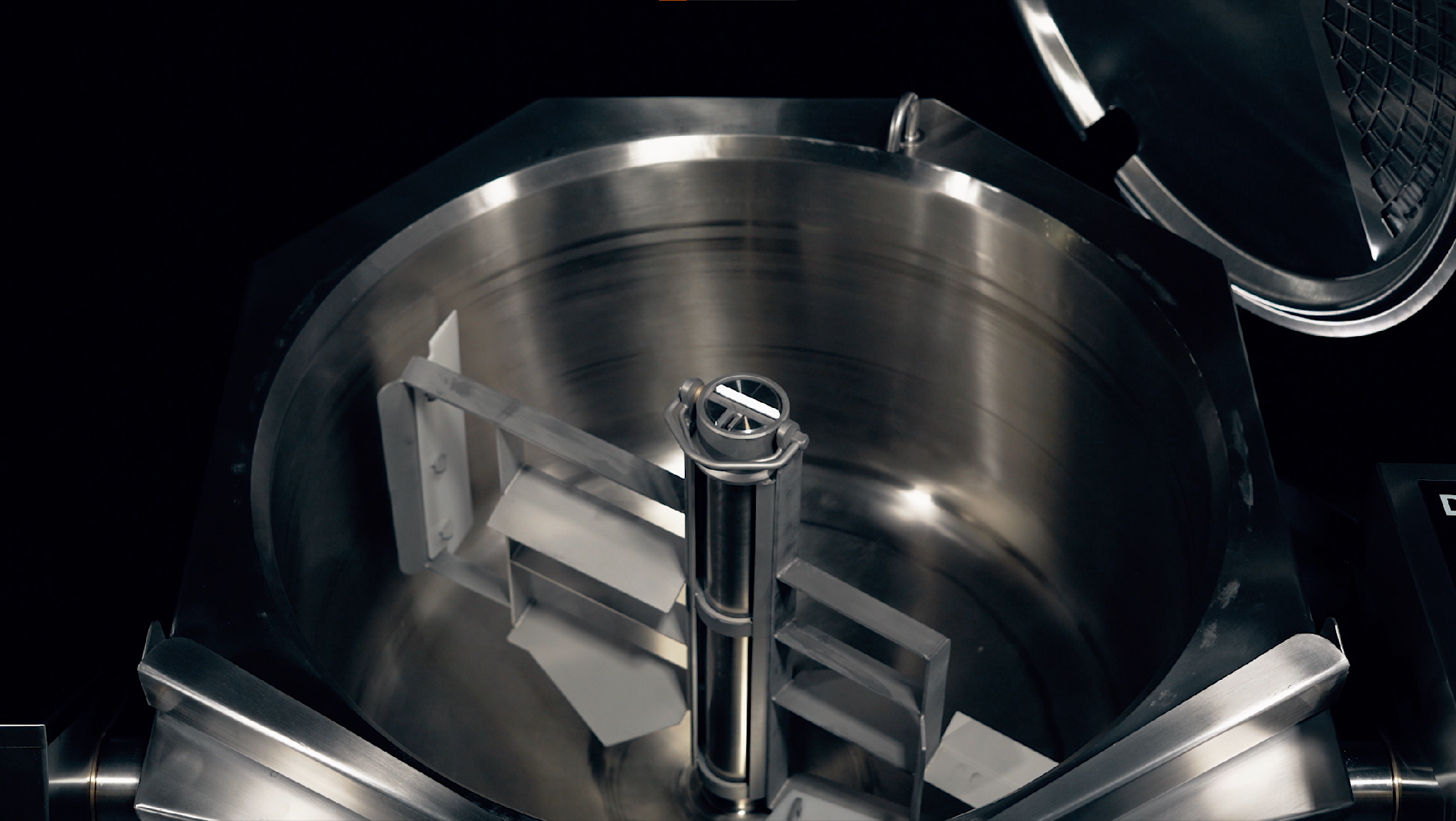
Seals and filters age first. Gaskets are heated and compressed every working day. The water filter and the filter on the electrical housing collect whatever the kitchen's water and air bring in, and a water valve that doses thousands of times a year will sooner or later stop closing tightly. These parts are renewed once a year, in about two hours.
The tilting mechanism and the gas springs carry mechanical load each time the kettle is emptied or opened. Springs lose force gradually and bushings develop play. None of this stops a kettle in a single day, but by the third year the movement is no longer what it was at installation.
The mixer shaft bearing and its gasket work whenever the mixer runs. In a kettle that mixes thick products for hours a day, they carry the most continuous load in the machine. Renewing them around year five stops a worn gasket from letting moisture reach the bearing.
Heating elements age with every heating cycle, and the risk of failure grows with operating hours. Replacing them around year six takes about an hour and a half of planned work, which is far less than a lost production day.
Two ways to pay for the same parts
Take two identical kettles installed on the same day. One is serviced to a schedule. The other is repaired when something stops working.
The second kettle looks cheaper for the first few years. Then a tilting spring weakens during the lunch run. The technician arrives, finds the fault and orders the part. The kettle waits for delivery, and so does the production plan. If a batch was in the vessel when it stopped, it may have to be thrown away. Staff work around the gap with smaller kettles and overtime, and a second visit is needed when the part arrives.
For the first kettle, the service window is agreed weeks ahead, outside peak production. The technician arrives with every part on the list and a known labour time. Over six years, this adds up to roughly 20 hours of labour per kettle and a parts list the kitchen knows in advance.
Planned maintenance does not remove every fault. Electronics can fail without warning, and a kettle cleaned with the wrong chemicals or hit by a pallet truck needs repair whatever its schedule says. What a schedule does remove are the failures that build up slowly through age and use. Those are the ones a kitchen can plan for.
A well-maintained kettle also keeps its precision. Tight seals and a water valve that closes properly keep heating and water dosing close to what they were at installation. HACCP records depend on that accuracy, and when it fades, it fades slowly enough to go unnoticed.
Planning it in practice
A maintenance plan for a mixing kettle fits on one page. It starts from the installation date and marks the years when the larger components are due. Most kitchens already plan summer or holiday shutdowns, and those are natural slots for service.
For Genier kettles, the schedule is already built. Genier Preventative Maintenance kits follow a six-year cycle: an annual Basic kit, with added packages for the tilting mechanism in year three and the mixer in year five. Year six renews the heating elements. Each kit has a fixed parts list and a fixed labour time, so the service can be quoted before the technician arrives.
Ask your Genier service partner for a maintenance plan for your kettles. A good place to start is any kettle installed three or more years ago. 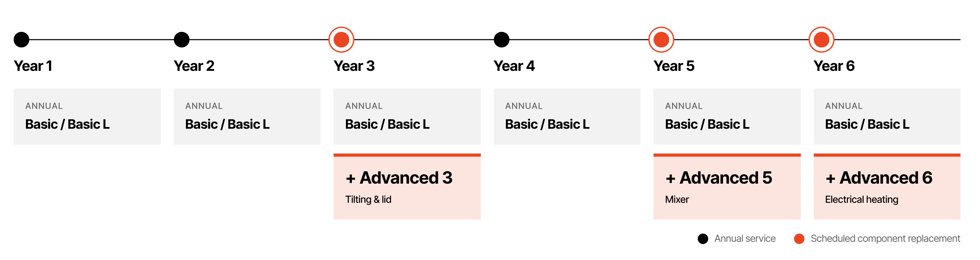 Frequently asked questions
How often should a mixing kettle be serviced?
Once a year for the basic service, which takes about 2.5 hours on a Genier kettle. Larger wear parts, such as the tilting gas springs on bigger kettles, are renewed on a longer cycle between years three and six.
Can maintenance prevent breakdowns?
It prevents breakdowns caused by wear, such as leaking gaskets and worn bearings. It does not protect against electronic faults or physical damage, so a well-maintained kettle can still need an occasional repair.
Does maintenance affect food safety?
Indirectly, yes. A worn water valve doses less accurately, and a worn lid gasket lets heat and steam escape. Both affect how well the kettle holds the volumes and temperatures your HACCP records rely on.
What is the difference between the annual service and the larger services?
The annual service renews seals, filters and water valve parts. In years three, five and six, it is combined with a larger package that renews one of the main mechanical or electrical assemblies.