How many portions a 300-litre kettle makes? Or kilos? Fair question, and there is no single answer. The same kettle gives you 870 main-course soup portions or 450 portions of leaf salad.
The difference is the food, not the machine. Understanding what actually sets the capacity of a mixing kettle is the key to moving from spec-sheet litres to batch sizes you can build a production week around.
What the litre figure on a spec sheet means
A Genier 475 has a net volume of 475 litres and holds 500 litres brimful. Nobody cooks to the brim. Between the number on the label and the food you can actually produce, four factors reduce the final yield.
Density
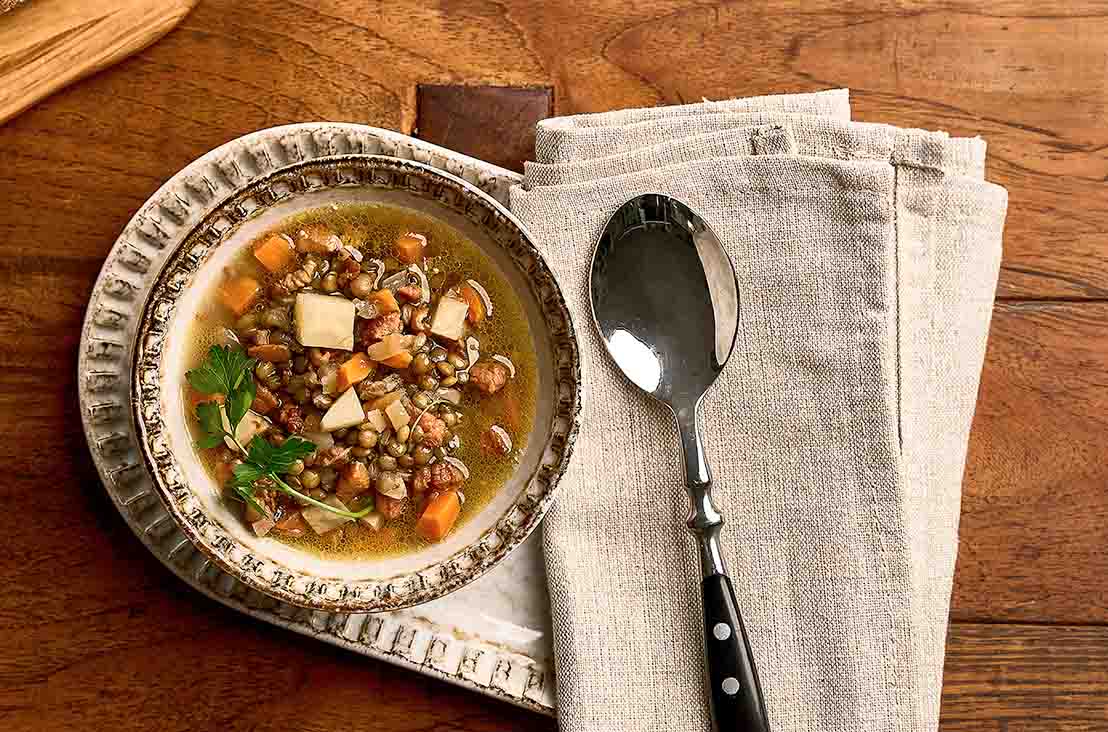
Soup weighs about 1.03 kg per litre. Boiled potato about 0.68. Loose leaf salad about 0.3. The litres stay the same; the kilos do not.
Mixing headroom
A mixing tool moves the product surface, and the surface needs somewhere to go. In documented reference figures at speed 20, a Genier 300, 400 or 475 needs roughly 20 mm from the rim. The 150 and 200 need about 15 mm, and the 60 to 100 about 10 mm. Wider kettle, more surface movement, more freeboard. Raise the speed and the gap grows.
Boiling allowance
Products that actually boil get another 10 mm on top of the mixing gap.
Water
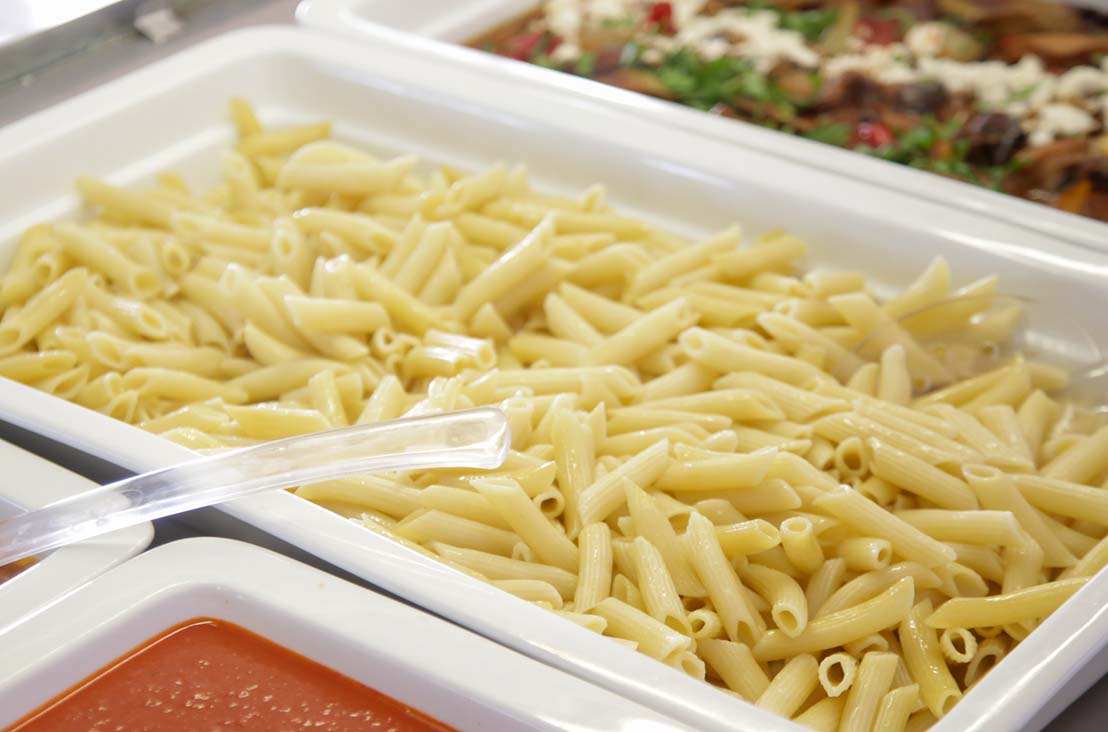
Pasta and rice capacity is a water question before it is a pasta question. What you can cook is set by the liquid the product needs, not by the dry weight.
On top of that, our capacity figures take a further 8 % off the calculated maximum, so the number still holds on a difficult raw material batch.
Five products, four kettle sizes
The table below is the short version. Batch weight in kilograms, one cooking cycle.
|
Batch size (kg) |
100 L |
200 L |
300 L |
475 L |
|
|
Soup |
109 |
212 |
315 |
496 |
|
|
Meat sauce and stew |
105 |
206 |
306 |
481 |
|
|
Boiled potatoes |
73 |
144 |
217 |
336 |
|
|
Cabbage salad with dressing |
23 |
48 |
72 |
95 |
Read the columns and the kettle behaves as you would expect. Read the rows and the picture changes. A 475 takes 496 kg of soup and 45 kg of leaf salad. Eleven times the weight, same vessel, same day.
The salad figure is not a limitation of the equipment. Leaf salad is mostly air, and a kettle filled with it is already full at 45 kg. Worth noting in the other direction too: 45 kg of dressed salad mixed in one pass replaces a lot of manual bowl work, and that is a capacity most kitchens never think to ask about.
Portions depend on who eats them
Batch weight is a property of the product. Portion count is a property of your customer.
A Genier 300 produces 315 kg of soup:
- For a staff canteen at 350 ml that is 870 main-course portions.
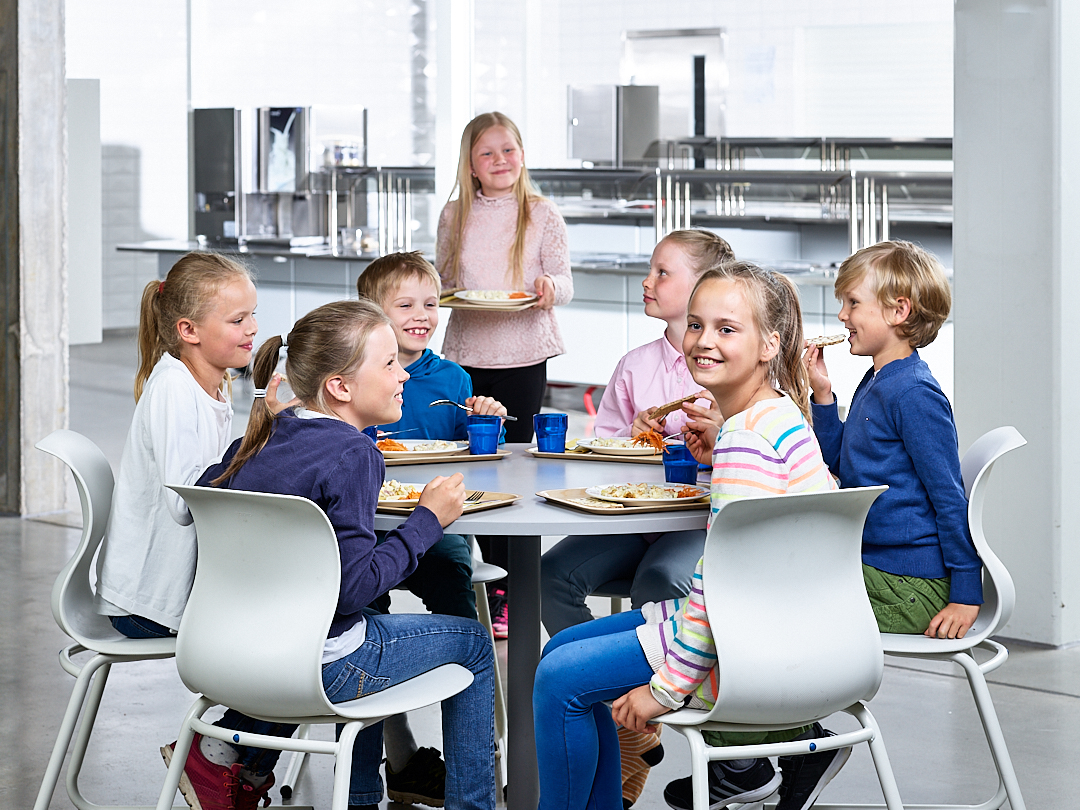
- For primary school pupils aged 7 to 12, where the reference portion is 210 ml, the same batch gives about 1 450 portions.
- For hospital patients at 263 ml, about 1 160.
So, A kettle correctly sized for a corporate canteen is oversized for a primary school and undersized for a military kitchen. Same litres, different answer.
What this changes in planning
Sizing: Size the kettle against your two or three highest-volume products, not against the largest number on the spec sheet. If your production is soups and sauces, density works in your favour. If it is salads and cold mixes, you need volume more than you need kilos.
Batch planning: One batch is one cooking cycle. Most kitchens run two or three cycles from the same kettle in a production shift, so daily capacity is a multiple of the batch figure.
Purchasing: Potato figures are peeled weight, so 336 kg cooked is 336 kg ordered. Rice and pasta are not. A 420 kg cooked rice batch is about 154 kg dry.
What these figures do not tell you
They are planning figures with an 8 % margin already built in. They are not guarantees. Density moves with the recipe, and a wet cabbage or an unusually starchy potato will shift the result by a few percent.
Three specific cases sit outside the table. Dough, batters and emulsified cold sauces are limited by mixing capacity rather than by volume. Marinated raw meat is added in two or three loads, not in one fill. And every figure assumes the mixing speed listed for that product; running faster changes the headroom.
Frequently asked questions
-
How many portions does a 300-litre kettle make?
Between roughly 450 and 4 400, depending on the product. Leaf salad gives about 450 portions, main-course soup about 870, and roux-based sauce about 4 380 at 70 ml. Pick the product before you pick the number. -
Why is the salad figure so much lower than the soup figure?
Density. Leaf salad weighs roughly 0.3 kg per litre against 1.03 for soup. Both fill the same kettle; one weighs a third as much. -
Does the portion count change if I serve children?
Yes, and significantly. Primary school portions are about 60 % of a standard adult working lunch, so the same batch serves around 65 % more children than adults. -
Is batch size the same as daily capacity?
No. Batch size is one cooking cycle. Daily capacity depends on how many cycles you run, cleaning between products and your chilling capacity downstream.
-
Can I fill the kettle to the rim?
For products that are not boiled and not mixed at speed, close to it. For anything that boils or mixes, the headroom is part of the process rather than wasted space.
-
Can I change the portion sizes in the calculator?
The calculator uses reference portion sizes for 15 customer segments, and you select the segment. If your own portion policy differs from the reference, scale the portion count by the ratio. A batch does not change; the number of plates it fills does.
Run the numbers for your own kitchen
We built a capacity calculator for exactly this. Pick your customer segment from the list, from kindergarten to military catering, and it gives you batch weights and portion counts for 14 products across all eight Genier sizes, from 60 to 475 litres.
It covers boiled potatoes, pasta, rice, mashed potato, soups, meat sauces, roux-based sauces, marinated meat, light and heavy salads, desserts and whipped desserts. Portion counts adjust to the segment you choose, so the school figure and the canteen figure come from the same sheet.
If you aren't already our customer or partner, just contact us if you want to see the calculator in action: info@genier.com