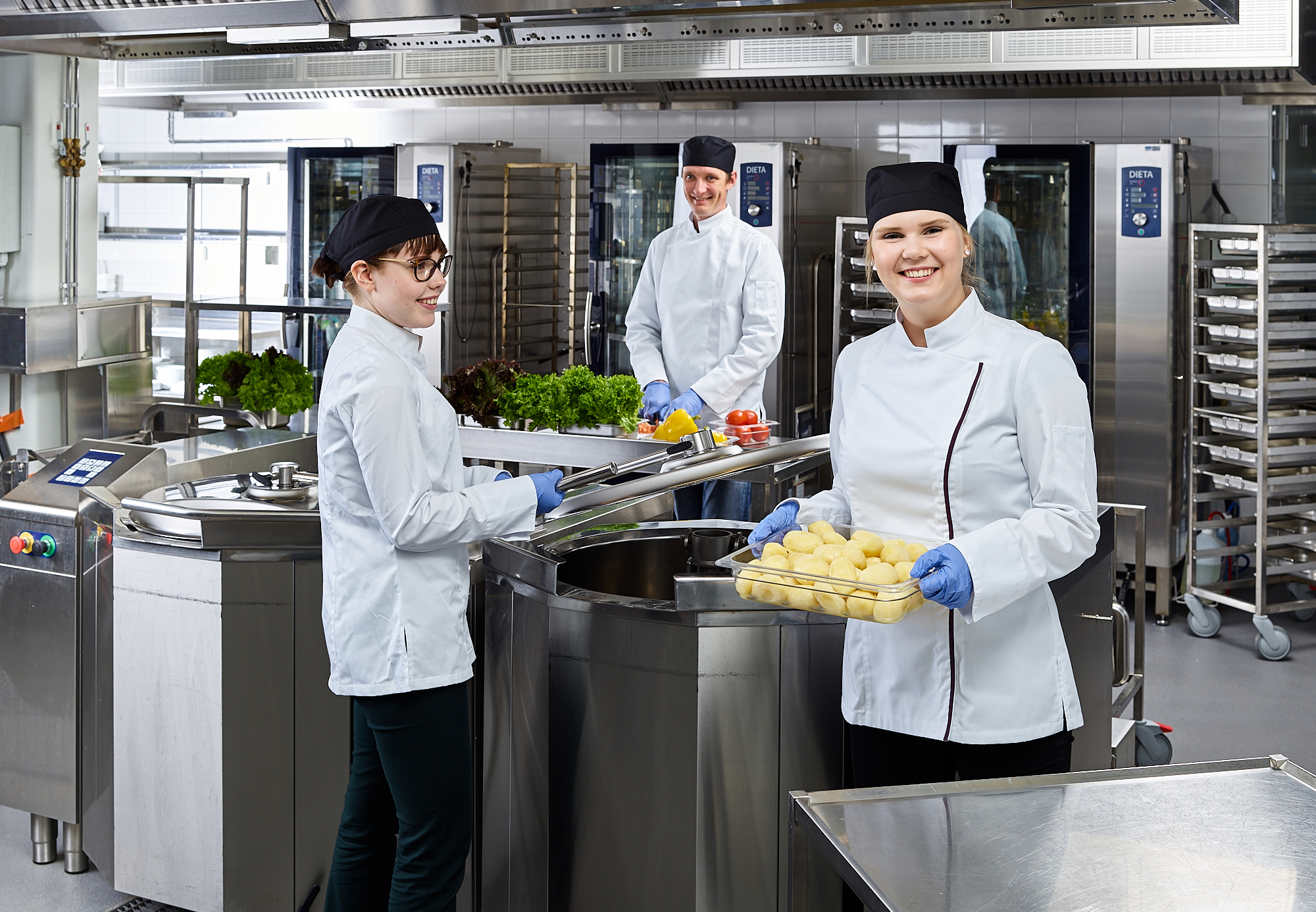
A kettle full of shredded cabbage is a good place to watch a mixing problem happen. The whole batch moves around the kettle in one slow ring, and four minutes later the seasoning is still sitting roughly where it was poured. The product moved, but didn't mix.
What a heavy mass actually does
A soup mixes easily because it flows. Liquid has almost no internal grip, so anything you put into it gets carried through the whole volume within a few rotations.
Dense products behave like a solid body instead. Shredded cabbage, a heavy meat mix have enough internal friction to hold together as one piece. The tool is a too large surface and pushes against the outside of that piece and the piece rotates. Nothing passes through it.
Speed does not fix geometry
Mixing requires the parts of a mass to change places with each other, and a rotating block never does that. Every piece of cabbage ends the cycle in the same position relative to its neighbours as it started.
The instinct is to turn the setting up, and it is worth understanding why that rarely helps.
A faster block is still a block. Increasing the speed makes the same mass rotate more quickly. When a mass refuses to mix, the answer is a change in tool geometry rather than a change in speed.
"When something isn't mixing, the first thing everyone does is turn the speed up. You see it spin faster, but it isn't helping. There's nothing else to try. With the hook there is."
What the hook does differently
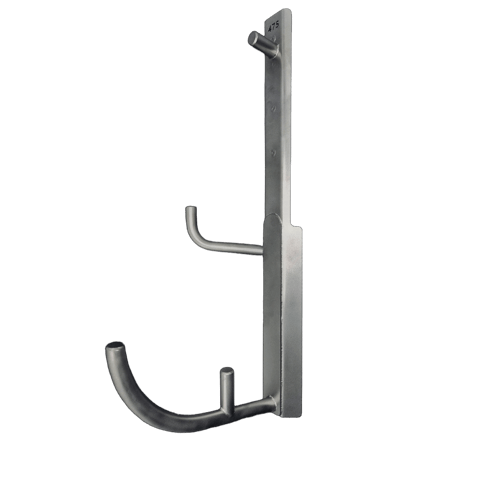
The Mixing Hook replaces the side mixing arm. Its shape lets it work into a dense product rather than push against the outside of it.
The effect is turnover. Instead of travelling around the mass, the hook lifts and drags product from one part of the batch into another, so the batch moves through itself. Ingredients change places. Seasoning that was sitting on top ends up somewhere in the middle, then somewhere else.
Working speeds run roughly 60 to 100 depending on the product. The hook can be used with the bottom mixing arm, with the Folding Tool, or on its own, and all three are correct configurations. Which one you choose depends on how much movement you want at the base of the kettle alongside the turnover.
The power of mixing motor
Whether a kettle can handle these loads like meat or dough comes down to torque. The speed range printed in a specification says nothing about it. What matters is how much force the drive can put through the tool when it meets 100 kg of cold meat, and whether it keeps moving or stalls against the mass. A Genier kettle delivers as much forge as a SUV.
For kitchens where heavy mixes are the daily routine rather than the exception, the heavy-duty mixer motor is worth specifying at the order stage.
Common questions
Why does my product rotate in the kettle without actually mixing?
Dense products have enough internal friction to hold together as one mass. The tool pushes the outside of that mass and the whole thing rotates, so the ingredients inside never change position relative to each other. Movement and mixing are not the same thing.
Should I increase the speed if a heavy mass is not mixing?
No. A faster rotating block is still a rotating block. Higher speed adds load and heat without improving distribution, and in some products it compacts the mass further. Change the tool geometry instead.
Can the Mixing Hook be used on its own?
Yes. The hook can be used with the bottom mixing arm, with the Folding Tool, or on its own. All three are valid configurations.
How much meat can a Genier kettle mix?
Approximately 35 kg in a 40–100 litre kettle, 70 kg in a 150–200 litre kettle and 145 kg in a 300–475 litre kettle. In every size the meat should be loaded in two or three stages rather than all at once, so the hook starts working in product that is already moving.